
It's All a Gift, My Fine Friend.
Beta Workshop Framework for 10-week small group study
Vulnerability
True freedom begins where vulnerability replaces the need to pretend
Authenticity
Authenticity is the courage to let your true story meet God's greater story.
Honest Reflection
The most important conversations you'll ever have begin with an honest look at your own heart.
Welcome, My Fine Friends
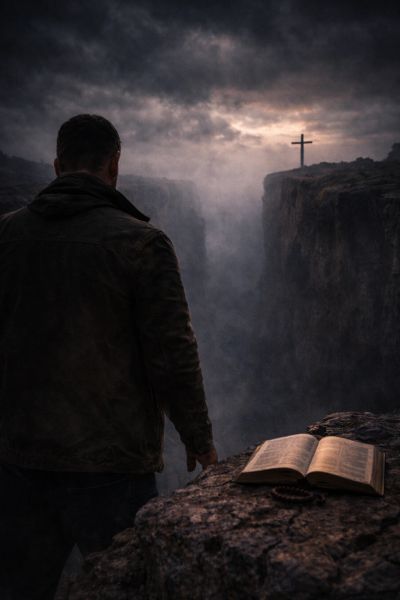
Grab your walking shoes, it's gonna be a hike.
Before we begin this journey together, I want you to know something about me.
I’m not a pastor. I’m not a theologian. I’m not writing from a place of having figured life out.
I’m simply a man who, after more than six decades on this earth, decided it was time to honestly look back over his life.
Not the version of my life that I told other people. The real one.
The places where I loved well. The places where I failed. The places where I hurt the people I loved the most. The places where I needed forgiveness. The places where I still needed healing.
As I looked back, I began to notice something. There was often a gap between what I believed…
what I told others…and how I actually lived. Sometimes that gap was small. Sometimes it was painfully wide.
This study is an invitation to close that gap. Not through guilt. Not through shame. Not by pretending we’re better than we are. But through honesty. Real honesty with ourselves.
Real honesty with one another. And ultimately, real honesty before God.
Every chapter begins with one of my stories from Hello Fine Friend. Those stories aren’t presented because my life is worth copying. They’re offered because I hope they give you permission to examine your own life with the same honesty. After each chapter, we’ll turn to Scripture. Not to make my story true. God’s Word doesn’t need my experiences to validate it.
Instead, we’ll allow Scripture to illuminate the questions my story raises, challenge our assumptions, reveal God’s character, and point us toward the healing that only Christ can bring.
Then comes the hardest part.
Looking honestly at ourselves. The questions throughout this study aren’t designed to test your biblical knowledge. They’re designed to invite you into a conversation with God. A conversation about your own heart. Your own wounds. Your own fears. Your own regrets. Your own hopes.
Because I believe many of us carry hurts we’ve never named. Narratives we’ve believed for decades. Shame we’ve hidden. Pain we’ve buried.
And yet Christ still invites us into freedom.
Throughout this journey, I hope you will come to realize one thing:
It’s all a gift.
We’ve all heard the phrase, “Every day is a gift.” But do we really believe that?
Do we believe it when life is beautiful? Certainly. But do we still believe it when life hurts?
When relationships fall apart? When dreams die? When we’re forced to face our own failures?
That’s the question we’ll wrestle with together. Because I believe that through the presence of community and the healing power of Christ, even our deepest wounds can become gifts.
Not because the wounds were good. But because God is. He redeems. He restores. He heals.
He makes all things work together for good for those who love Him.
My prayer is that you’ll discover something beautiful throughout this journey.
Not that you’ll become someone else. But that you’ll become more fully the person God created you to be.
If, together, we can become a little more honest…a little more vulnerable…
a little more willing to trust God with every part of our story…
then perhaps we’ll discover that even the most difficult chapters of our lives were never wasted.
Perhaps we’ll discover…that they, too, were a gift.
Heartbreak & Joy

Read Chapter 16-Hello Fine Friend
Core Thought
Can heartbreak and joy coexist?
Our natural instinct is to believe that joy only returns after the pain is gone.
But what if that’s not how God works?
What if heartbreak and joy aren’t enemies at all?
What if joy isn’t found on the other side of suffering, but can actually exist alongside it because our hope is anchored in Someone greater than our circumstances?
That is the question I want us to wrestle with together.
Reflection
In this chapter, I talk about the difference between happiness and joy.
Happiness is always dependent upon our circumstances.
Joy runs much deeper. It is rooted in the presence, promises, and faithfulness of God.
Heartbreak leaves empty places in our hearts.
Those places are real.
They matter.
And in my experience, they cannot simply be filled by another relationship, another accomplishment, or another distraction.
Only God can occupy those deepest places of loss with His presence and His promise.
So the question isn’t whether heartbreak exists. We have all experienced it.
The question is this:
Can joy exist beside it?
What Does Scripture Say?
Isaiah 61:3
“…to bestow on them a crown of beauty instead of ashes, the oil of joy instead of mourning…”
Isaiah paints a beautiful picture of God replacing mourning with joy.
As you reflect on your own story, ask yourself:
Has God removed your grief…
or has He taught you to experience joy while you continue to carry it?
Romans 8:28
“And we know that in all things God works for the good of those who love Him…”
This verse doesn’t tell us that all things are good.
It tells us that God is at work through all things, and ultimately all those things will be knit together into a beautiful tapestry for Him.
How might shifting your focus from the pain itself to God’s larger story change the way you view your heartbreak?
James 1:2–3
“Consider it pure joy… whenever you face trials…”
James asks us to see suffering through a different lens.
Trials produce endurance.
Endurance strengthens our faith.
Can you identify times that you learned endurance during the hardest seasons?
John 16:33
“In this world you will have trouble. But take heart! I have overcome the world.”
This passage speaks to me more than any of the others.
Jesus never promised us a life without heartbreak.
He promised us Himself...and spoiler alert, Jesus Wins!
My joy is not rooted in the absence of pain.
It is rooted in the certainty that Jesus is still on His throne, He has already overcome the world, and my eternity is secure in Him.
Questions for Reflection
Take your time with these questions.
Don’t rush to answer.
Allow yourself to be honest before God.
1. Think of a time when you were completely heartbroken.
What happened?
How did it change you?
2. Looking back today, can you identify any blessings that emerged from that experience?
Did it produce endurance within you?
3. Were you able to recognize any blessings while you were still walking through the trial?
If so, what were they?
If not, why do you think they were so difficult to see?
4. Has God used that experience to encourage, comfort, or help someone else?
How has your pain become part of another person’s healing?
5. Take a few quiet moments and ask God one simple question:
“What is the gift that exists within this heartbreak?”
Not because the pain itself was good…
but because God is always good.
Write down whatever comes to mind.
This Week’s Invitation
This week, spend time praying through one area of heartbreak that you still carry.
Rather than asking God to simply remove the pain, ask Him to reveal where His joy, hope, and presence already exist within it.
Then, find one person who may be walking through a similar season.
Reach out.
Listen.
Encourage them.
Share your story if the opportunity presents itself.
Perhaps one of the greatest gifts hidden within our own heartbreak is the ability to remind someone else that hope is still alive, and His name is Jesus.
Childlike Faith
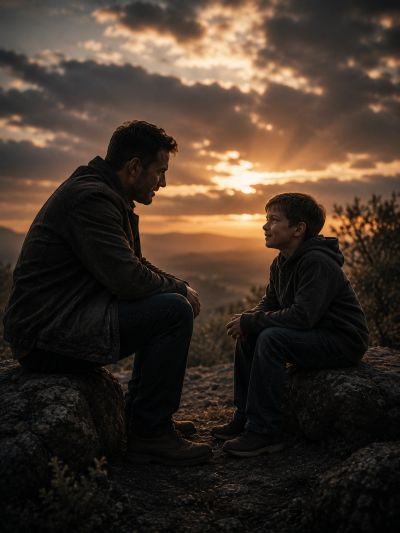
Read Chapter 22-Hello Fine Friend
Core Thought
What does childlike faith really look like?
When Jesus told His disciples that they must become like little children to enter the Kingdom of Heaven, He wasn't telling them to become childish.
He was inviting them, and us to rediscover something many of us have lost.
Children trust.
Children wonder.
Children ask questions.
Children believe.
Children know how to receive love.
The older we become, the more life has a way of convincing us to question our value, protect our hearts, and become self-reliant.
Childlike faith isn’t about being immature.
It’s about recovering the unfailing trust we once had in our Heavenly Father.
Reflection
As I reflect on this chapter, I keep coming back to one question:
Why do children trust so easily?
I believe it’s because they know they are valued.
Jesus valued children.
When the disciples tried to send them away, Jesus welcomed them.
He embraced them.
He made room for them.
Children naturally trust those who make them feel safe and valued.
Unfortunately, many of us didn’t experience this consistently, or at all while growing up.
Words spoken over us.
Words never spoken.
Criticism.
Neglect.
Broken promises.
Comparison.
Rejection.
Little by little, our trust began to erode.
Eventually, we stopped believing in our own value.
We became more cautious.
Less creative.
Less willing to speak up.
Less willing to trust.
Somewhere along the way, many of us exchanged childlike faith for self-protection.
The beautiful invitation of Jesus is to recover what was never meant to be lost—not by trusting imperfect people, but by authentically trusting our perfect Heavenly Father.
What Does Scripture Say?
Psalm 116:6
“The Lord protects the simple-hearted; I was in great need, and He saved me.”
God has always had a special concern and protection for those who are vulnerable.
Does our own desire to be seen as strong and capable, prevent us from fully trusting God? What would it look like to approach God with that same openness of a child, today?
Matthew 11:25
“You have hidden these things from the wise and learned, and revealed them to little children.”
Jesus reminds us that faith is not about intelligence.
It is about humility.
Children are willing to ask questions.
They admit what they don’t know.
They remain teachable.
Are you still teachable before God?
Ephesians 5:1
“Be imitators of God, therefore, as dearly loved children.”
Children naturally imitate those they love and admire.
Who do you imitate? Who do you strive to become like?
As I grow in my relationship with God, do I truly desire to become more like Him?
Isaiah 11:6
“...a little child shall lead them.”
This beautiful picture reminds us that God’s Kingdom often works in ways that make little sense to the world.
Strength looks different.
Leadership looks different.
Faith looks different.
Sometimes the greatest example of trust comes from the smallest among us.
Matthew 18:3–4 | Mark 10:14 | Luke 18:17
In each of these passages, Jesus welcomes children and tells His disciples that unless they become like little children, they cannot enter the Kingdom of Heaven.
Notice what Jesus does not say.
He doesn’t ask us to become childish.
He invites us to become childlike.
That distinction matters.
What is one thing you simply believe is true to the core of who you are?
Questions for Reflection
Take a few quiet moments before answering these questions.
Ask God to help you answer honestly.
1. What comes to mind when you hear the phrase “childlike faith?”
How would you define it?
2. Do you see the difference between being childlike and being childish?
How would you describe that difference?
3. Can you think of someone who demonstrates genuine childlike faith?
What qualities stand out about their life?
4. When was the last time you truly felt valued by your Heavenly Father?
Have you ever?
If not, has that made it difficult for you to receive His love?
5. C.S. Lewis suggested that childlike faith is marked by humility, curiosity, wonder, hope, and trust.
When was the last time you experienced Wonder?
Which of those qualities comes most naturally to you?
Which one have you lost along the way?
6. Looking back at your own childhood, were there moments that strengthened your trust?
What were the moments that damaged it?
How might those experiences still influence the way you relate to God today?
This Week’s Invitation
This week, intentionally express value to the children you encounter.
Look them in the eye.
Encourage them.
Listen to them.
Celebrate their creativity.
Make them feel seen.
Notice how they respond to you.
Then spend a few quiet moments asking God to help you rediscover the childlike faith that may have been buried beneath years of disappointment, criticism, fear, or self-doubt.
Ask Him to remind you that before you are anything else in this world…
You are His beloved child.
And because of that…
You have incredible value and there is no greater gift than that.
The Self-Inflicted Thorn in Your Side
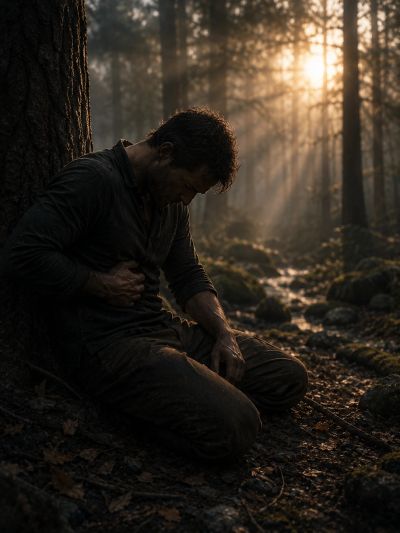
Read Chapter 27-Hello Fine Friend
Core Thought
What is the self-inflicted thorn in your side?
When we hear the phrase “thorn in my side,” we usually think about another person.
A difficult coworker.
A strained relationship.
A frustrating circumstance.
An ongoing problem.
But often the thorn causing us the greatest pain isn’t outside of us.
It could be something we’ve carried within us for years?
A poor decision.
A broken relationship.
A secret.
A regret.
A shame we’ve never spoken aloud.
One of the hardest truths I’ve had to face is that most of the deepest thorns in my life were self-inflicted.
The beauty of the Gospel is that God doesn’t waste our thorns.
He redeems them.
Reflection
A thorn has a way of demanding your attention.
Whether it starts as a small irritation or a blunt impact, left untreated, it becomes something you constantly feel.
The same is true in our lives.
Our mistakes.
Our failures.
The people we’ve hurt.
The regrets we carry.
The things we hope no one ever discovers.
Many of us spend years trying to hide those places.
We bury them.
We avoid them.
We pretend they no longer exist.
But hidden wounds rarely heal.
Instead, they quietly shape the way we see ourselves, the way we relate to others, and the way we experience God.
I’ve learned something through my own failures. Wounds cannot fully heal in darkness.
The moment I bring my thorn into the light of day, it begins to heal.
It might be painful at first, but at the first hint of sunlight, it begins to lose its power.
You see, shame survives in secrecy, while grace flourishes in honesty.
And once healing begins, something remarkable happens.
The very thorn that once wounded us becomes the exact thing God uses to help someone else.
That is the true gift hidden within our failures.
What Does Scripture Say?
Numbers 33:55
God warned Israel that failing to deal with what He had called them to confront would become “thorns in your sides.”
Sometimes our greatest struggles are not simply what happened to us.
Sometimes they grow from what we avoided, tolerated, or failed to confront.
Judges 2:2–3
Israel chose compromise instead of obedience.
The consequence was that the very people they refused to remove became “thorns in your sides.”
Poor decisions often create long-lasting consequences.
But even those consequences can become places where God teaches us dependence, humility, and wisdom.
2 Corinthians 12:7–10
Paul speaks openly about the thorn he carried.
Whatever the thorn was, God chose not to remove it.
Instead, God reminded Paul:
“My grace is sufficient for you, for My power is made perfect in weakness.”
Paul’s thorn became a continual reminder that his strength came from God, not himself.
Perhaps our greatest weaknesses become the places where God’s strength is most clearly displayed.
Psalm 103:12
“As far as the east is from the west, so far has He removed our transgressions from us.”
God’s forgiveness is complete.
The question isn’t whether Christ has offered grace.
The question is whether you are willing to receive it.
Questions for Reflection
Take a few moments before answering these questions.
Invite God to reveal whatever you’ve spent years trying to hide.
1. When you hear the phrase “thorn in my side,”what immediately comes to mind?
Is it a person?
A circumstance?
An ongoing frustration?
If it is something external, what has your part been in the situation?
2. As you honestly examine your life, what burden weighs on you the most today?
Is it connected to a decision, wound, regret, or failure that still lives inside you?
3. How has carrying that thorn shaped the way you see yourself?
Has it drawn you closer to God…
or farther away?
4. What does this chapter teach you about grace?
Is it easier for you to extend grace to others…
or to receive God’s grace for yourself?
Why?
5. Psalm 103 says God removes our sins “as far as the east is from the west.”
What image comes to mind when you hear those words?
Do you truly believe your failures are that far removed?
If not…what keeps you from believing it?
6. Jesus wore a crown of thorns so that your deepest wounds would not have the final word.
How might meditating on how Christ truly suffered for you, change the way you view your own thorn today?
This Week’s Invitation
This week, identify one thorn you’ve carried for far too long.
Spend time praying honestly about it.
If appropriate, bring that burden into the light with someone you deeply trust.
Not to relive your shame…
but to begin your healing.
Then ask God one final question:
“How might You use this part of my story to become a gift for someone else?”
Because through Christ, even our deepest failures are never beyond redemption.
They may become the very testimony that points another person toward hope.